

Harnett and Lillington, and their roles in the American Revolution
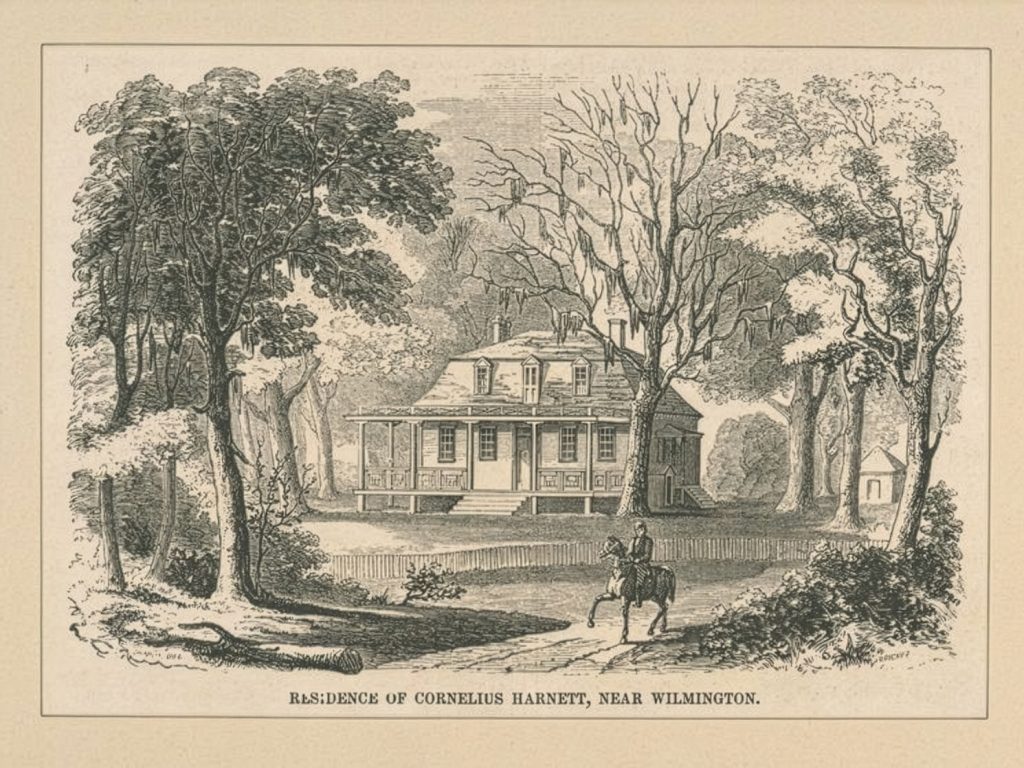

Photo: N.C. History Project
Harnett County and the town of Lillington were established in 1855, a full 79 years after the U.S. declared its freedom from Great Britain. But the two men whose names are affiliated with the home of Campbell University — Cornelius Harnett and Alexander Lillington — played significant roles in the American Revolution.
As the U.S. celebrates the 250th anniversary of the signing of the Declaration of Independence, we look at Harnett and Lillington’s history (one was a politician and the other a brigadier general) and what Buies Creek — which wouldn’t be formed until the year of Campbell’s founding in 1887 — looked like during the late 1700s.
Cornelius Harnett
Cornelius Harnett was a North Carolina politician in the 1765 when the Stamp Act — the first direct tax imposed on the American colonies by Great Britain, which got the ball rolling toward the colonies’ revolt — went into effect. That year, Harnett became chairman of the Sons of Liberty and was among the leaders in the Stamp Act’s resistance.
Prior to his political career, Harnett was a merchant, farmer and slave owner from Wilmington. Born in 1723 in Chowan County near present day Edenton, Harnett’s parents immigrated to the colonies from Ireland. His parents moved to Wilmington shortly after his birth, and Harnett spent his childhood working the family farm along the Cape Fear River. He purchased a plantation in his 20s and became involved in politics, winning a seat on the Wilmington Town Commission in 1750. Four years later, he was elected to serve as Wilmington’s first delegate to the North Carolina Provincial Assembly, where he served for 21 years.
When the Stamp Act went into effect in 1765, Harnett’s resistance led some to call him the “Samuel Adams of North Carolina.” In 1775, he became the first president of the North Carolina Provincial Council, the chief executive of the revolutionary state. He became a member of the Continental Congress in 1777, and he was a signatory to the Articles of Confederation. That year, he was chosen to be one of three North Carolina delegates to the Continental Congress.
From The North Carolina History Project: “Harnett’s reputation as a revolutionary leader in his state preceded him, and with excitement many delegates anticipated Harnett’s arrival at the Continental Congress. Harnett soon wielded his influence on weighty matters. The Congress focused attention on whether the 13 colonies should formally unite and form a Confederation. Thomas Burke, one of the other North Carolina delegates, supported cooperation between states but disliked any formal unity among them. Harnett, however, encouraged states to create a formal union before making any foreign alliances. Such agreements, he predicted, were going to be vital in winning the War for American Independence.”
In 1781, just three years after the North Carolina General Assembly ratified its Articles of Confederation, Harnett — who was two years into a personal battle with a severe case of gout — was taken captive and imprisoned by British forces during their invasion of Wilmington. According to the N.C. History Project, Harnett was “imprisoned in a roofless blockhouse … harsh conditions and winter weather accelerated his demise.” He died on April 20, 1781.
Alexander Lillington
John Alexander Lillington was a planter and politician when the American Revolution called him to become a military leader.
His grandfather and namesake took part in Culpeper’s Rebellion in 1677 in what is now Pasquotank County — one of the early colonial uprisings against English rule.
The younger Lillington was orphaned as a child and raised by his uncle along the Cape Fear near Wilmington. He was moderately active in local government in his 20s, and he became a lieutenant in the New Topsail Company militia to help repel the Spanish invasion of Brunswick in the late 1740s. In the 1760s, he represented New Hanover County in the colonial assembly and served several roles (including justice of the peace) leading up to the American Revolution.
In 1765, he joined John Ashe and Thomas Lloyd in protesting the Stamp Act on behalf of the Cape Fear region to Gov. William Tryon. In 1768, at the age of 48, he served as a lieutenant colonel of a light infantry on their expedition to Hillsborough (a small skirmish between farmers and the local government). As the Revolution approached, he became a delegate for New Hanover County. In 1776, he helped lead a battalion of minutemen to a victory in the Battle of Moore’s Creek Bridge, a fight between loyalists and nearly 1,000 North Carolina patriots that is considered a catalyst for North Carolina’s state independence (the other 12 would join shortly thereafter).
From NCPedia: “Lillington arrived first at the battlefield but was soon reinforced by Richard Caswell, who took command of the forces. Together they thwarted the advance of the Loyalists in a victory for which the ultimate credit probably belonged to Gen. James Moore. Concerning the field of battle, however, the partisans of Lillington and Caswell wrangle over the merits of their respective heroes in a running debate that probably emanated from the observations of Joseph Seawell Jones, A Defence of the Revolutionary History of North Carolina.
Lillington would remain in the military throughout the war until his capture in 1781 (along with Cornelius Harnett) during the British invasion of Wilmington. Unlike Harnett, Lillington survived his capture and would live to see the end of the war when the British surrendered at Yorktown that October.
Also like Harnett, Lillington owned a plantation — Lillington Hall — and was a slave owner (he enslaved 22 people, according to a tax listing in 1763). He died in 1786 at the age of 66 and is buried in Lillington Cemetery in Pender County.
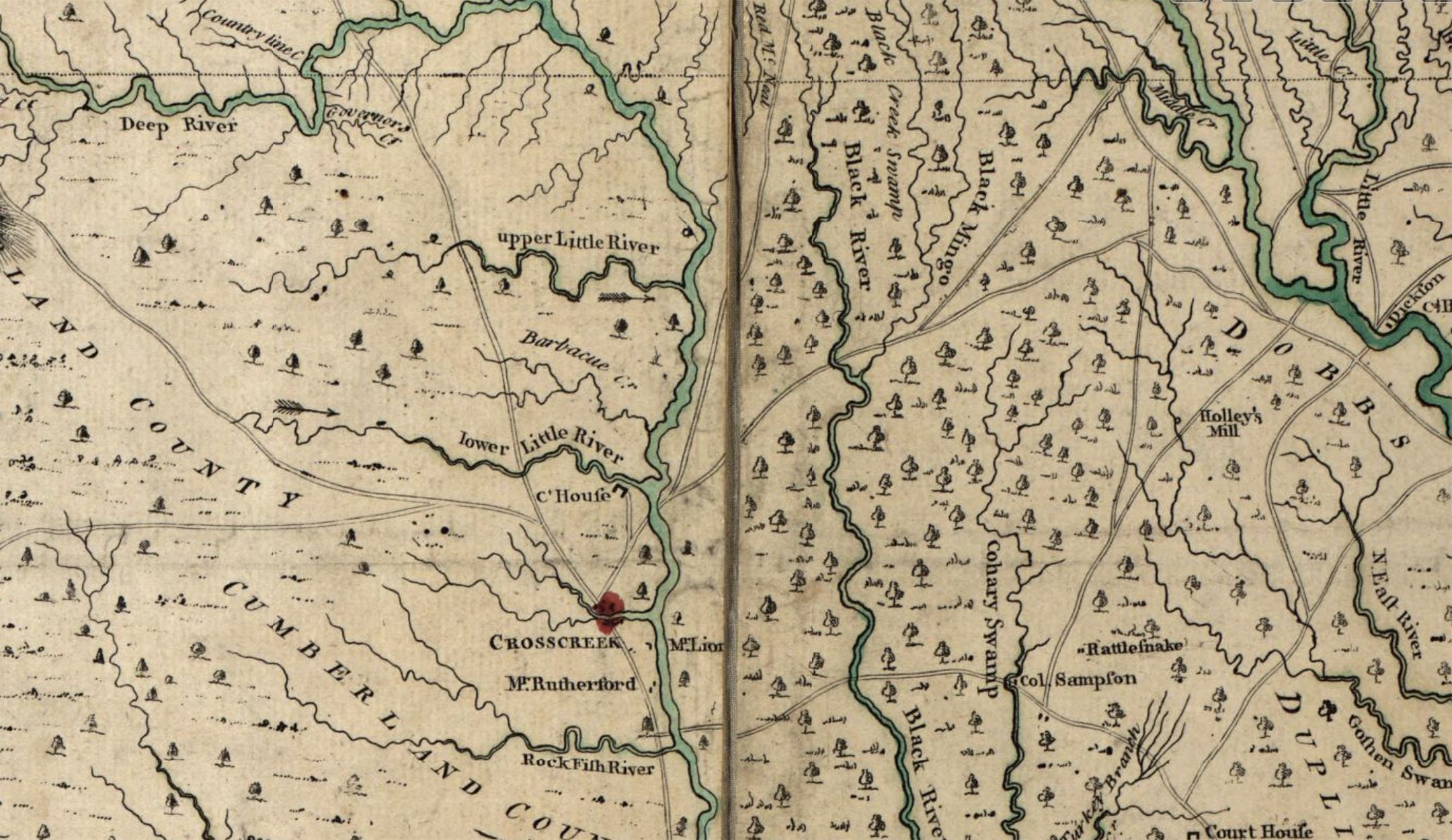
Buies Creek in 1776
North Carolina was made up of 35 counties and six districts in 1776. The area that is now Buies Creek — home to Campbell University — was located in the northeast portion of Cumberland County in the Wilmington District.
Very little existed in the form of towns and roads in the area in 1776. Nearly 30 years earlier, the area saw its first wave of Scottish immigrants who would call the region home. Many families (including the ancestors of University founder J.A. Campbell) crossed the Atlantic to escape persecution and unfair rent and tax hikes from their English king to find new land and a new life.
Among the group was a man named Archibald Buie, who set foot on North Carolina soil for the first time at the mouth of the Cape Fear in Wilmington.
According to legend, his only possessions were the clothes on his back and whatever else he and his family could carry with them. The Buies were part of the first organized group of Highlanders from Argyllshire to reach Wilmington before sailing up the Cape Fear and settling in what would one day become Cumberland and Harnett counties.
Buie and a small group boarded small pole boats and made their way up the Cape Fear, their journey lasting over a week. He found a place to settle where “the bottomland faced the Cape Fear near the mouth of a small stream,” where the creek that bears his name today meets the river. He would return to Wilmington the following year to officially sign for the title of 320 acres of what is now Buies Creek, North Carolina (the name would be official in 1887).
The region along the river that would eventually become Harnett County saw two wars — Gen. Cornwallis marched along the west side of the Cape Fear on his retreat from the Guilford Courthouse to Wilmington in 1781, and the Battle of Averasboro (near Erwin) became one of the final fights of the Civil War in 1865. By 1887 — the year J.A. Campbell founded Buies Creek Academy — just over 10,000 people lived in Harnett County.