

Campbell Law 50th Anniversary Spotlight: Margaret Currin ’79

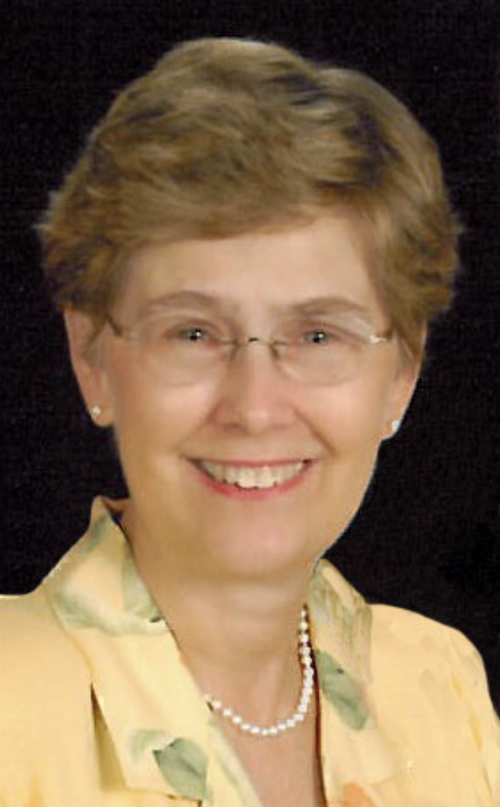
Margaret Currin ‘79
Current role: Retired Campbell Law Professor, Academic Dean
Margaret Currin ‘79 has had a life full of firsts. She was the first student to matriculate into the nascent Campbell Law School, which began classes in the fall of 1976. She went on to graduate second in the law school’s inaugural class. During her time in law school, she clerked for the U.S. Attorney for the District of Columbia. She then served as a legislative assistant and counsel to U.S. Sen. John Tower (R-Texas). In 1981, she joined Campbell Law as an assistant dean and assistant professor. Nominated by President Ronald Reagan in 1988, she served until 1993 as the first female U.S. Attorney for North Carolina, serving the Eastern District of North Carolina. Following her term as a U.S. Attorney, Currin returned to Campbell Law, where she went on to become associate professor and associate dean, overseeing academic, student and administrative affairs. During her 30 years in legal education/law school administration, she single-handedly built the law school’s nationally ranked Externship Program and served as its director for 25 years. Currin has also served as a leader in numerous organizations, including as president of the National Association of Former United States Attorneys, serving on and chairing the Wake County Board of Elections and being elected to the Wake County Bar Association/Tenth Judicial District Board of Directors. Currin currently serves on the law school’s Alumni Association Board of Directors. In 2016, Currin was recognized for her service to the State of North Carolina and her community with the Governor’s Order of the Long Leaf Pine, the state’s highest honor.
What brought you to Campbell Law?
Having attended Meredith College, I was looking for a law program that I thought would have a similar atmosphere — where the faculty knew and were accessible to students. Even though Campbell was NEW, a complete unknown, I felt that its atmosphere would be what I was looking for. And I knew that if Dr. Norman Wiggins was involved, it would be a quality program.
Practice areas
I have had several practice and teaching areas. One of the first was Election and Lobby Law — compliance, not politics. While in Washington, D.C., I staffed Senator Tower on the Senate Rules Committee, which dealt with election law. Having served on and chaired the Wake County Board of Elections and later represented clients before the Federal Election Commission also sparked this interest. Another practice/teaching area was Administrative Law. It was a required course in our second year. If it hadn’t been required, I wouldn’t have taken it because I had no idea what it was. (I learned that it was one of the most important courses — even if not the most interesting — in one’s legal education.) My first job out of law school was legislative oversight of administrative agencies and then it made sense. When I returned to Campbell, then Dean Leary Davis assigned me to teach Administrative Law as Professor David Dickson (whom we affectionately referred to as “Dr. Death”) was about to retire. When I sat in on his class the last semester he taught it, it really clicked after the Washington experience. Service in the U.S. Attorney’s Office led me into teaching Federal Criminal Law and Government Litigation. I’m not sure what led me to teaching Scientific Evidence (unless it was watching NCIS), which I taught for a number of years on my own, and later was privileged to co-teach it with Professor William “Woody” Woodruff. He brought a great deal into that course.
A lesson Campbell taught you
Prepare, prepare, prepare. And return phone calls.
People who shaped you
Because of my unique relationship and history with Campbell Law, there are so many individuals who fit this description. As a student, faculty member and administrator at the school, all of my charter classmates, the Deans, colleagues (faculty and staff) and students with whom I served made a great impact upon my life. If I had to name any colleagues who especially touched both my personal and professional lives, it would be Professor Robert Jenkins (founder of Campbell’s Trial Advocacy Program) and Dr. J. Stanley McQuade. In the law school’s early years, Professor Jenkins was the glue that held the faculty together. And God broke the mold when He made Dr. McQuade.
Advice for current students
In addition to studying hard and taking more challenging courses, while in law school, students should expose themselves to as many different aspects of potential law practice as possible so they will have a real idea what they may truly want to do. As I told so many of my student externs, before you buy a gallon of Pistachio ice cream — only to discover that you actually don’t like Pistachio ice cream, get a tasting spoon and sample as many different flavors as you can.
The next 50 years
Campbell Law should continue its founding principle of preparing its graduates to go out into the real world prepared to practice law, especially in underserved communities.
Sidebar
Most adventurous thing you’ve done: Everything professionally that I’ve done since law school graduation has been adventurous. First, working on Capitol Hill as legislative assistant, then legislative director and legal counsel, for Sen. John Tower. Then returning to Campbell Law as Assistant Dean (for Advancement, Alumni Relations, CLE and Placement) and Assistant Professor. Next, serving as U.S. Attorney for the Eastern District of North Carolina. And finally, returning to Campbell Law, rounding out 31 years as Associate Dean (for Academic, Administrative and Student Affairs), Professor and Externship Director.
Proudest moment: As a student, being a member of Campbell’s Charter Law Class and actually being the first student to matriculate at the law school. As a member of the faculty, hooding my son, Thomas, as he graduated from Campbell Law in 2010.