

Campbell Students Gain Career Insights from Irregular Warfare Professionals
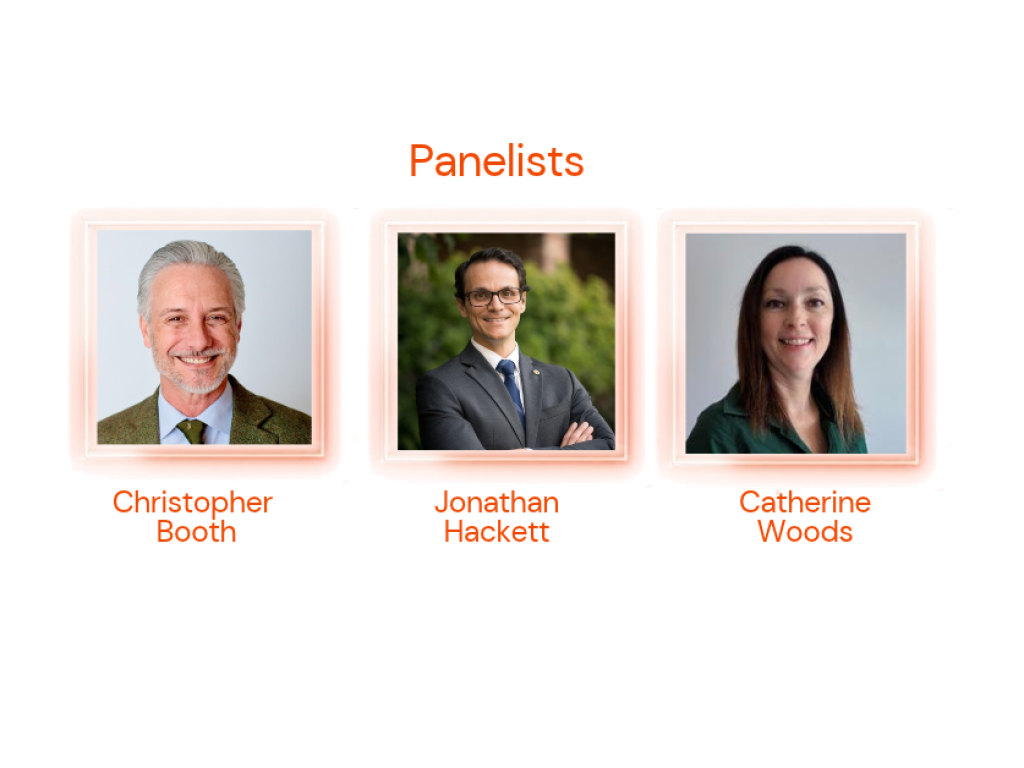

Students, guests, and staff recently gathered for Campbell University’s virtual panel discussion, “From Education to Impact: Exploring Careers in Irregular Warfare,” an event designed to provide insight into the many pathways that lead to careers in national security, intelligence, defense, and related fields.
Hosted by the Dean of Adult & Online Education, Nicole M. Winget, the discussion featured accomplished professionals whose careers have spanned military service, intelligence operations, law, finance, technology, and government. While their backgrounds were remarkably different, a common theme emerged throughout the conversation: the most impactful careers are often built by embracing unexpected opportunities and maintaining a commitment to lifelong learning.
One of the panelists, Jonathan Hackett, reflected on his journey from Marine Corps intelligence to law school and public service. Looking back on the opportunities that shaped his career, he encouraged students not to become overly focused on a rigid career plan. Instead, he advised them to recognize and seize opportunities when they arise, remarking that, “When the door opens, be ready to walk through it instead of just kind of looking for doors.” His perspective underscored the importance of adaptability and initiative in a field where career paths are rarely linear.
That theme of curiosity and continuous growth was echoed by Catherine Woods, whose career has crossed multiple sectors, including defense, financial intelligence, banking, and emerging technologies. Woods emphasized that success often comes from developing a broad base of knowledge rather than limiting oneself to a single area of expertise. As she explained, “Being inquisitive and curious and acquiring knowledge of all types is really valuable.” Her experience illustrated how diverse skills and perspectives can become powerful assets when addressing complex global challenges.
The importance of purpose-driven work was a recurring topic throughout the discussion. Chris Booth, whose career has included service as an Army officer, attorney, CIA case officer, and defense technology executive, encouraged attendees to think carefully about why they are pursuing a particular path. He cautioned that careers in national security require more than a fascination with the work itself, noting that, “There has to be some kind of reason that you’re doing it. And it can’t because it’s cool.” His message challenged students to seek careers aligned with their values and motivations rather than external perceptions.
Beyond technical expertise and credentials, the panelists emphasized the value of personal growth and resilience. Hackett noted that professional judgment develops through experience and, at times, failure, reminding attendees that “You have to be ready to fail because the only way to learn how to do that is to make mistakes.” Woods offered similar advice, encouraging students to take ownership of their development and remain intentional learners throughout their careers. In her words, “Try and be responsible for your own learning.” Booth added that authenticity and trust remain essential in any profession, particularly those centered on relationships and influence, explaining that “You have to be genuine because I think people can tell whether or not you’re honest.”
As attendees reflected on the panelists’ insights, it became clear that many of the competencies discussed are the same skills Campbell University intentionally cultivates throughout its academic programs. From critical thinking and problem-solving to adaptability, communication, and ethical decision-making, the university’s educational mission is designed to prepare students for the types of challenges and opportunities described by the speakers. Their experiences served as a powerful reminder that success in irregular warfare, national security, and related fields depends not only on technical expertise, but also on the ability to learn continuously, adapt to change, and lead with purpose.
As the conversation turned toward leadership and long-term impact, each speaker reflected on what meaningful success looks like. For Hackett, it comes down to service, sharing that his goal is “leaving the place better than you found it.” Woods encouraged attendees to approach challenges with openness and understanding, offering the memorable advice to “be a scout, not a soldier,” a reminder to seek understanding before forming conclusions. Booth concluded by reflecting on the rewards of public service and the opportunity to contribute to something larger than oneself, describing the work as both “rewarding” and “worthwhile.”
The event provided attendees with a look at the opportunities and challenges associated with careers in irregular warfare and national security. More importantly, it demonstrated that there is no single path to success. Whether entering the military, government, private sector, or nonprofit world, students left with a clear message from the panel: stay curious, embrace opportunities, invest in continuous learning, and focus on creating a meaningful impact wherever your career takes you.
As Campbell University continues to prepare the next generation of leaders, events like From Education to Impact provide valuable opportunities for students to connect classroom learning with real-world experience. By hearing directly from accomplished practitioners, students gain insight into the skills, mindsets, and values that will empower them to make a difference in an increasingly complex global environment. We thank our panelists for their time and advice!