

Campbell Law Career Center hosts interview skills workshop featuring top 10 interview tips
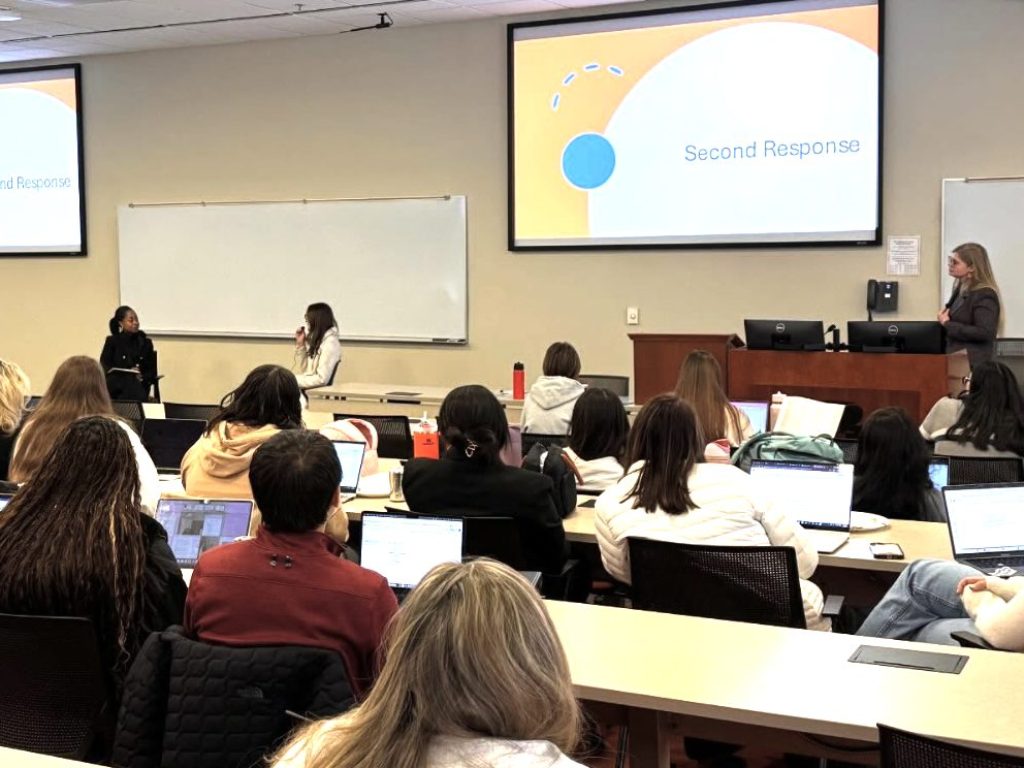

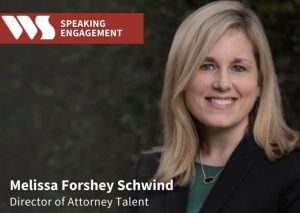
RALEIGH – The Campbell Law Career Center recently held an Interviewing Skills Workshop with Ward & Smith’s Director of Attorney Talent Melissa Forshey Schwind.
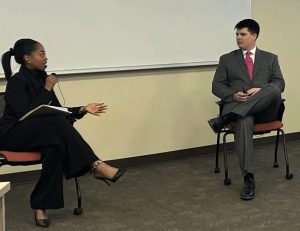
As someone who regularly interviews law students and knows what makes an interview successful, Forshey Schwind provided tips and insights during a lunch event that also featured a mock interview demonstration courtesy of two third-year law students — Caroline Harris and Reese Dickerhoff — and Wallace Fellow Darrah Perry ’25.
Forshey Schwind’s preparation advice included research, practice, logistics, storytelling, resume command, structured answers, thoughtful questions, aligning experiences to law and planning responses to difficult topics.
Following are 10 tips she provided for preparing for job interviews:
- Research the employer thoroughly
- Treat the employer like a client – research the firm/organization “like it is your client;”
- Know basic facts: locations, practice areas, who you’re meeting with, etc.;
- Look up your interviewers (e.g., on the firm website).
- Practice interviewing (mock interviews)
-
- Interviewing is a skill, not something “innate;”
- The speaker herself did mock interviews with colleagues when interviewing for her current job;
- Use:
-
-
- A significant other, best friend, or peer to run practice interviews;
-
-
-
- Career services mock interviews program when offered.
-
-
- Practice helps you:
-
-
- Get the jitters out before meeting actual employers;
-
-
-
- Get feedback and tips on how to improve.
-
- Use Career Services proactively
-
- Have them review your resume and cover letters;
- Ask them to help you prepare for interviews;
- They may also share insight about specific employers since they know the firms well.
- Prepare your logistics and professional presence
-
- Dress appropriately (suit or business attire) for in-person and virtual interviews;
- Plan your environment for virtual interviews:
-
-
- Avoid places with bad internet; go to the law school or a more stable location if needed;
-
-
-
- Set up your camera so it’s not at an odd angle (e.g. not looking up your nose).
-
-
- Eliminate distractions:
-
-
- Silence your phone and watch, use “Do Not Disturb”;
-
-
-
- Bring copies of your resume for in-person interviews.
-
- Prepare your “why” and personal story
-
- Be ready for “Tell me about yourself and why you’re interested in this opportunity;”
- Treat it like an elevator pitch:
-
-
- Who you are;
-
-
-
- Why you came to law school;
-
-
-
- What motivates you about this type of work/industry;
-
-
-
- It should be succinct and brief, not a 10-minute life story from high school onward;
-
-
-
- Practice this answer in advance.
-
- “Master your resume”
-
- Assume every line is fair game;
- Be ready with at least one concrete anecdote for:
-
-
- Every job or position;
-
-
-
- Activities and student organizations;
-
-
-
- Hobbies listed;
-
-
-
- Theses/dissertations mentioned
-
-
- If you can’t talk comfortably about something, don’t put it on your resume.
- Prepare structured answers to behavioral questions
-
- Use the STAR Method: Situation, Task, Action, Result;
- For “tell me about a time…” questions, practice the following:
-
-
- Briefly describing the situation and task;
-
-
-
- What you did;
-
-
-
- What happened as a result;
-
-
- The speaker notes many candidates ramble or never truly answer the question, which raises doubts about what they actually did or learned;
- She explicitly suggests using AI to get common interview questions and then creating bullet points for your answers in advance.
- Prepare thoughtful questions to ask the interviewer
-
- Never say you have no questions – she calls that the “biggest red flag;”
- Come in with at least five to 10 questions prepared, such as:
-
-
- “What do you enjoy about your job?;”
-
-
-
- “What’s the most exciting thing day to day that summer associates do?;”
-
-
- Even if you already know the answer from the website or someone else, it can still be useful to ask and hear how different people respond.
- Prepare how to connect your experiences to law practice
-
- Think about how your experiences show:
-
-
- Client service orientation;
-
-
-
- Working under deadlines/pressure;
-
-
-
- Dealing with difficult customers/clients;
-
-
-
- Collaboration across the teams;
-
-
-
- Receiving and using feedback;
-
-
- Be ready with examples that highlight transferable soft skills; this shows you’ll integrate more easily into a firm.
- Prepare to address “tough topics”
-
- Anticipate and plan how you’ll discuss:
-
-
- Low grades or academic struggles – what went wrong; what you learned, and concrete steps you took (meeting professors, changing study habits, etc.);
-
-
-
- Geographic ties – especially for regional firms, clearly explain why you want to be in that market;
-
-
-
- Practice area interests – it’s okay not to know exactly, but:
-
-
-
-
- Be honest that you’re still exploring and
- Do not name practice areas the firm doesn’t have, in cover letters or interviews;
-
- These are all topics you should think through and plan for in advance.
-
ABOUT CAMPBELL LAW SCHOOL
Since its founding in 1976, Campbell Law has developed lawyers who possess moral conviction, social compassion and professional competence, and who view the law as a calling to serve others. Among its accolades, the school has been recognized by the American Bar Association (ABA) as having the nation’s top Professionalism Program and by the American Academy of Trial Lawyers for having the nation’s best Trial Advocacy Program. Campbell Law boasts more than 5,000 alumni, who make their home in nearly all 50 states and beyond. In 2026, Campbell Law is celebrating 50 years of graduating legal leaders and 17 years of being located in a state-of-the-art facility in the heart of North Carolina’s Capital City.